How To Rent A Car In Morocco With No Deposit (2026)


If you've ever rented a car abroad, you know the deposit moment. The clerk at the counter places a €1,500 hold on your card. Your spending limit is gone for the rest of the trip. You wonder why this is necessary, what happens if you scratch a wheel, and whether you'll see the money again. This guide explains how rental deposits actually work in Morocco, why most companies require them — and how on 13 of our 27 cars, you can bring that number to €0.
I've been operating CarsRental.ma since 2015. I run the fleet, handle the insurance side, and personally process most claims. What follows is the full picture — the three insurance tiers, what a deposit actually is, what's covered, what isn't, what happens in an accident, and the comparison with the international chains. No marketing fluff. The kind of brief I'd want before signing a rental contract abroad.
The short answer
Yes — you can rent a car in Morocco with zero security deposit. The mechanism is simple: you upgrade from basic insurance to Premium, and depending on the car, the deposit is reduced or eliminated entirely. On our 13 economy and family cars (Dacia Logan, Fiat 500, Hyundai Tucson, etc.), Premium brings the deposit to €0. On luxury cars (Range Rover, Porsche, Audi Q8), it cuts the deposit by 50–70% but leaves €500–€2,000.
Premium insurance costs an extra €15–€100 per day depending on the car. On a Dacia Logan, you pay €15/day to free up €1,000 of your card balance. On a Range Rover Sport, €50/day to free up €2,300. The math is the same in either case: you trade a daily fee for card freedom plus full accident assistance.
How rental insurance actually works in Morocco
Every car rental in Morocco comes with basic insurance by law. This is mandated by the Moroccan insurance regulator (ACAPS) and covers third-party liability — if your rental damages another car or injures someone, the basic insurance handles the claim. The deposit isn't there to cover third-party damage. It's there to cover your car.
What the deposit actually is
The deposit is the maximum amount you could owe if you damage the rental car while at fault. In European insurance terminology this is called the franchise — the deductible the insurance won't waive. On a Dacia Logan that figure is €1,000. On a Range Rover Vogue it's €5,000. The insurance company covers the rest of the repair. The deposit is the rental company's way of making sure that if damage happens, the franchise amount is already secured and not in dispute.
The three insurance tiers
Basic insurance — included in the daily rate (€0 extra). You hold the full deposit as a pre-authorization on your card. If you're not at fault in any accident, you pay €0 regardless. If you are at fault, you owe the full deposit.
Smart insurance — +€10 to €70/day. The deposit drops by roughly half. Your liability drops with it.
Premium insurance — +€15 to €100/day. The deposit drops to €0 on most economy and family cars. On luxury cars, it drops significantly but doesn't always reach zero — usually €500 to €2,000.
Premium also bundles in accident assistance — including towing from the accident site to the workshop, which on basic insurance the customer pays out of pocket. That's the part most travelers don't notice on the pricing page. Premium isn't just deposit reduction; it's a full coverage package.
The 13 cars where Premium = €0 deposit
These are most of our economy, compact, and family-sized cars. They cover the majority of rentals — most travelers don't need a Vogue. If you're flying into Marrakech or Casablanca and you want to drive without holding a deposit, pick from this list.
| Car | Class | €/day | Smart upgrade | Premium upgrade | Basic deposit | Premium deposit |
|---|---|---|---|---|---|---|
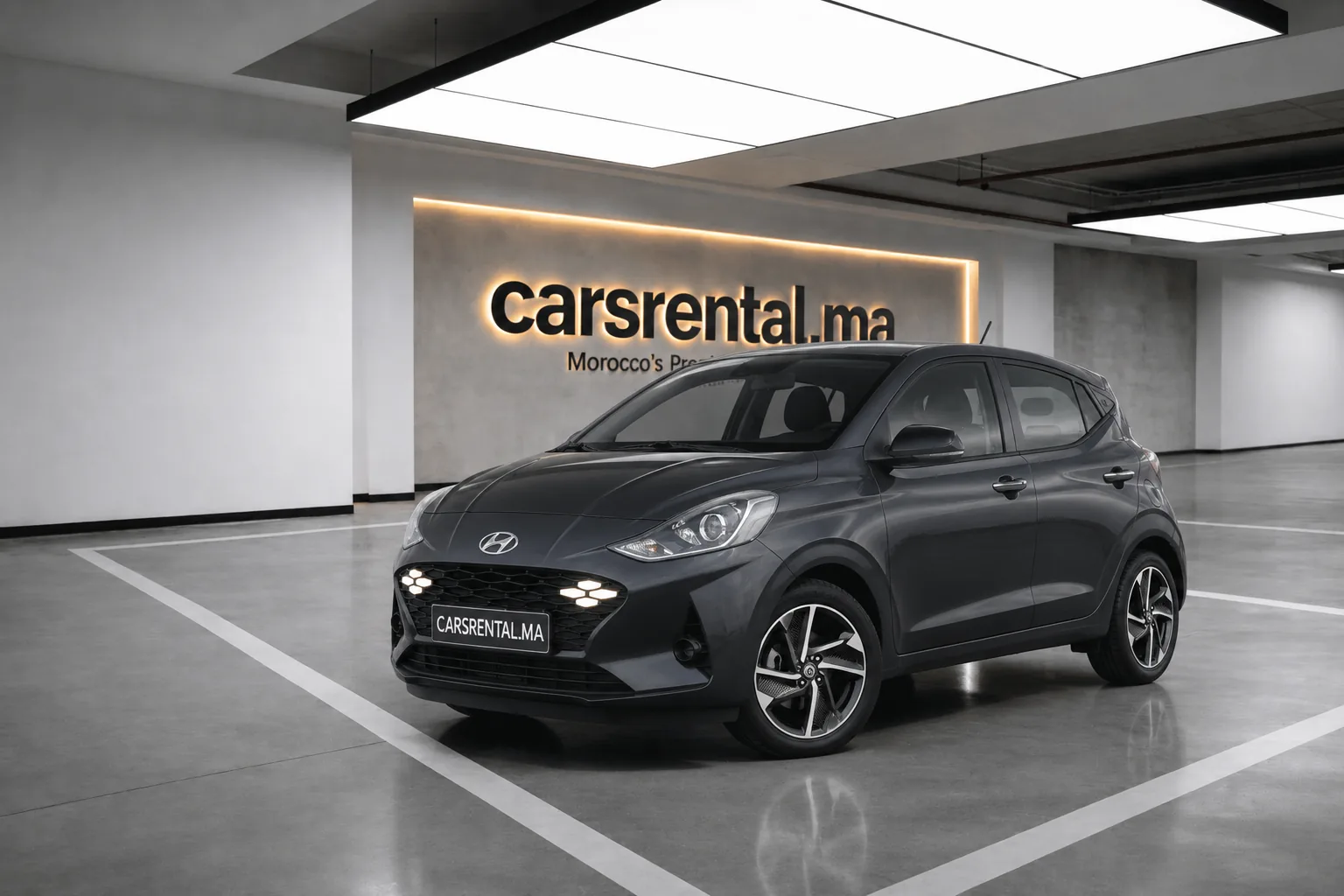
| Hyundai i10 | Compact | €32 | +€10 | +€15 | €600 | €0 |
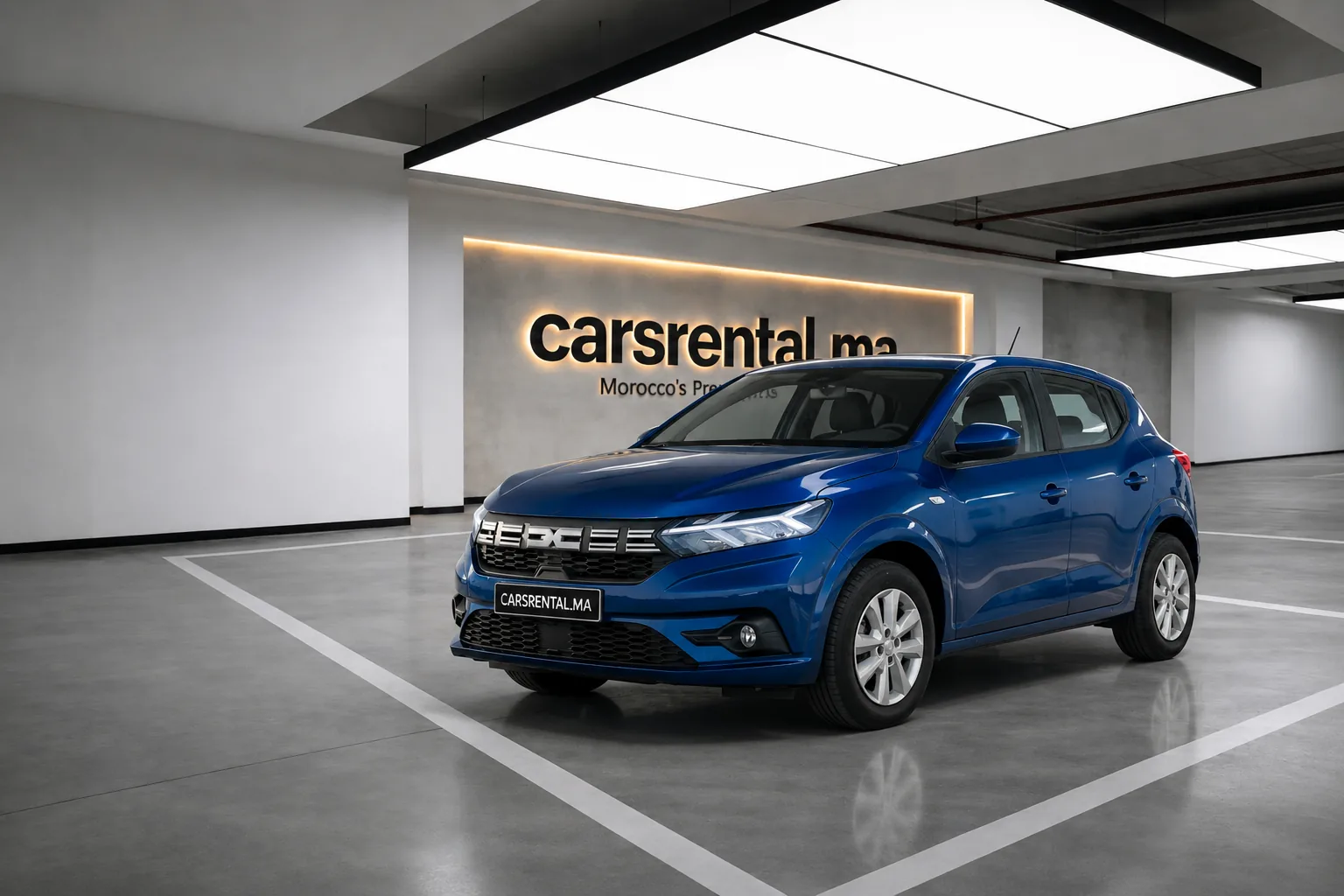
| Dacia Sandero | Compact | €35 | +€15 | +€20 | €600 | €0 |
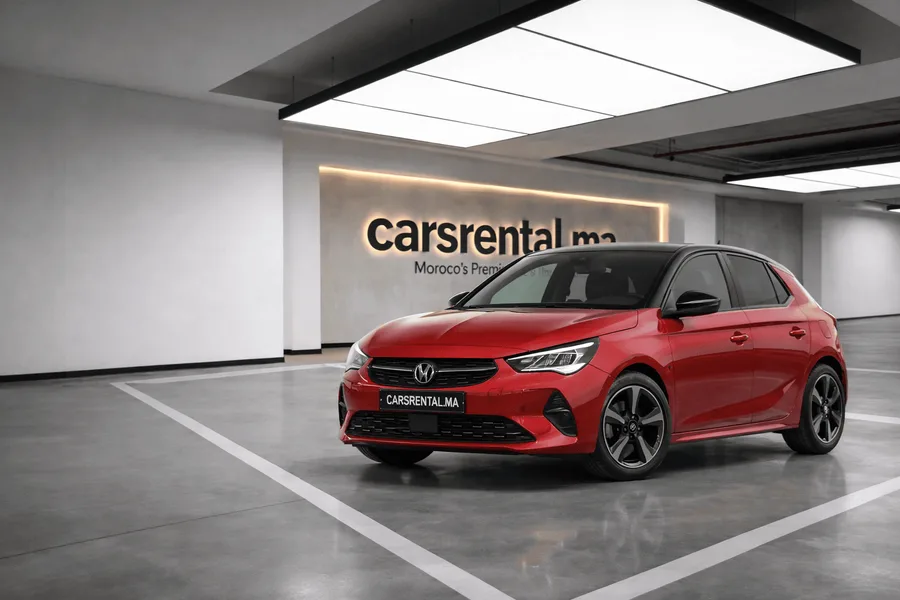
| Opel Corsa | Citadine | €35 | +€10 | +€15 | €1,000 | €0 |
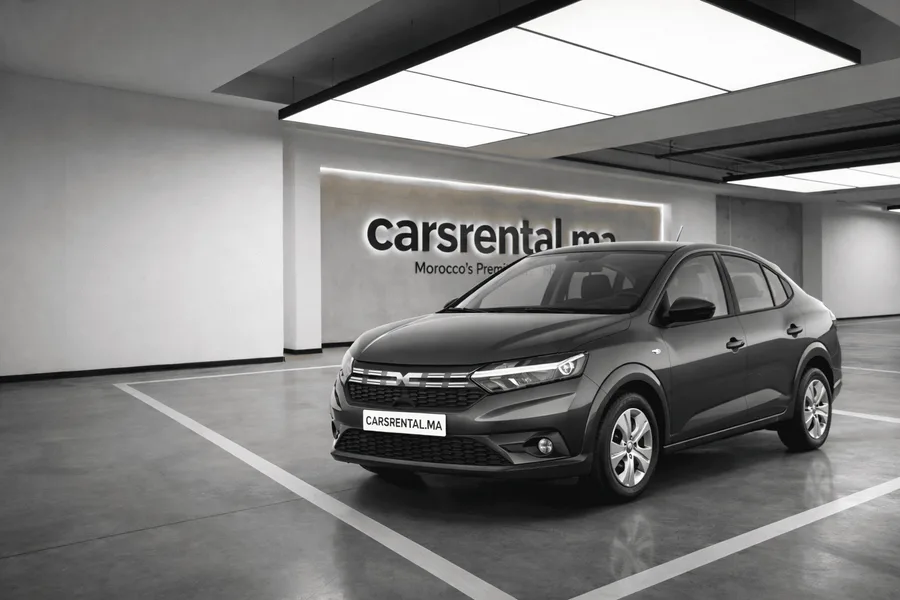
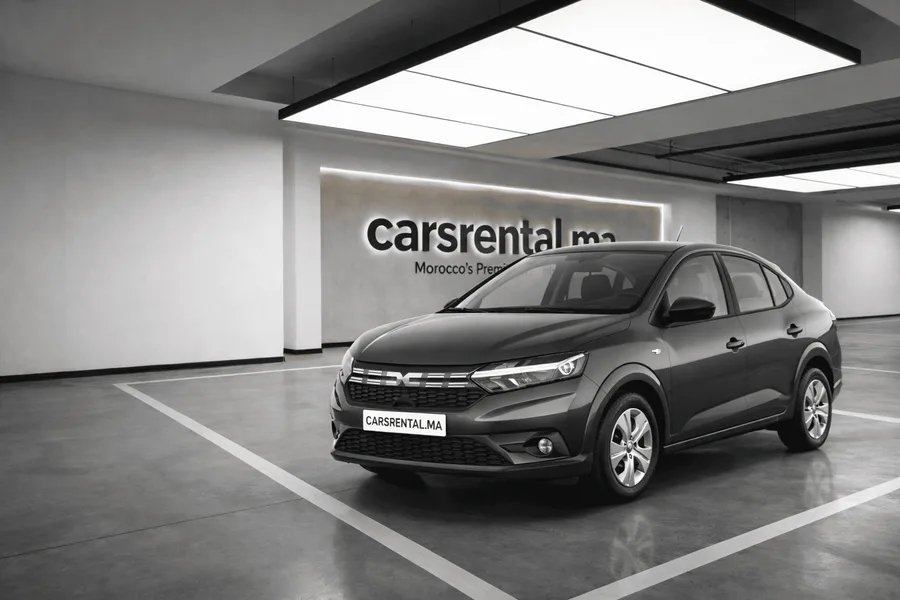
| Dacia Logan | Compact | €40 | +€10 | +€15 | €1,000 | €0 |
| Dacia Logan Automatic | Compact | €30 | +€10 | +€15 | €1,000 | €0 |
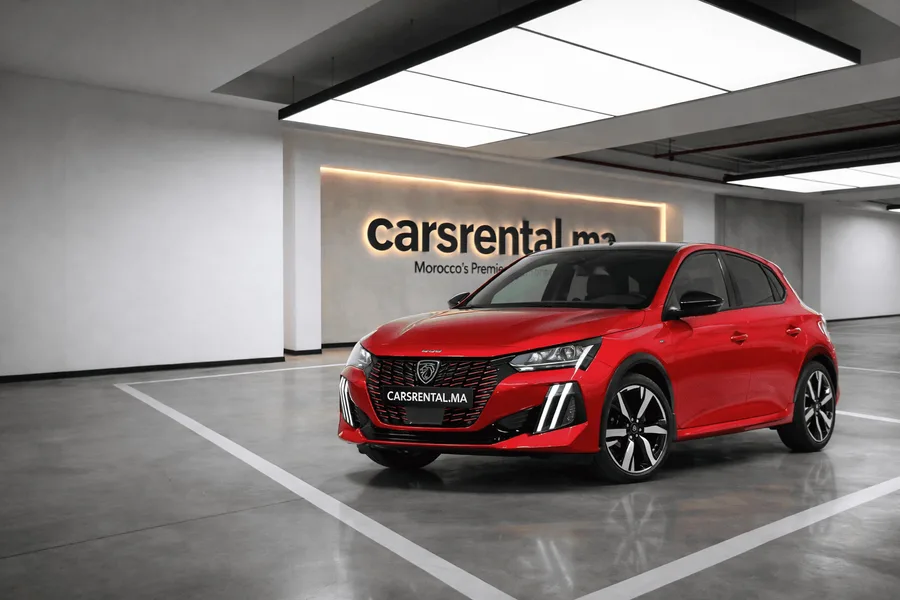
| Peugeot 208 | Compact | €35 | +€10 | +€15 | €1,000 | €0 |
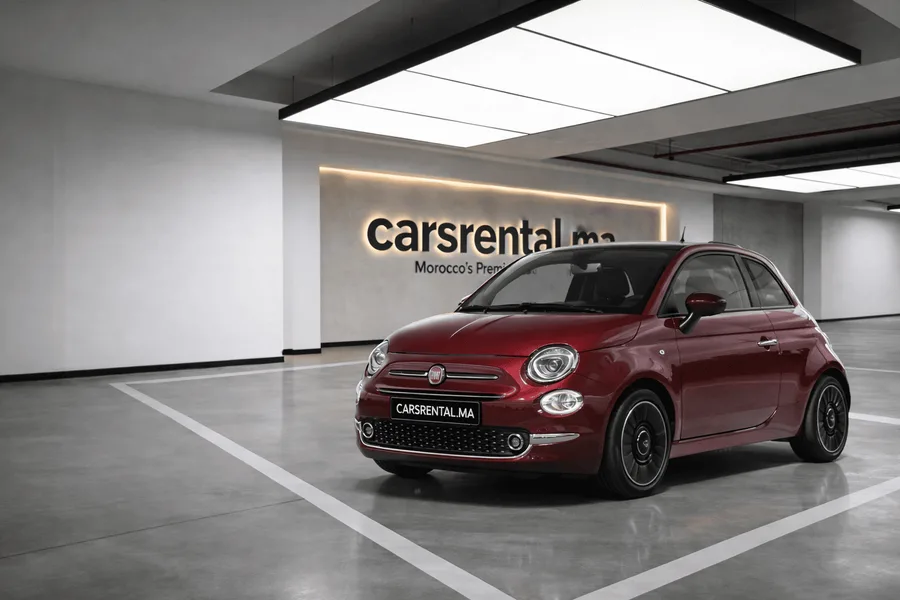
| Fiat 500 | Mini | €35 | +€10 | +€15 | €1,000 | €0 |
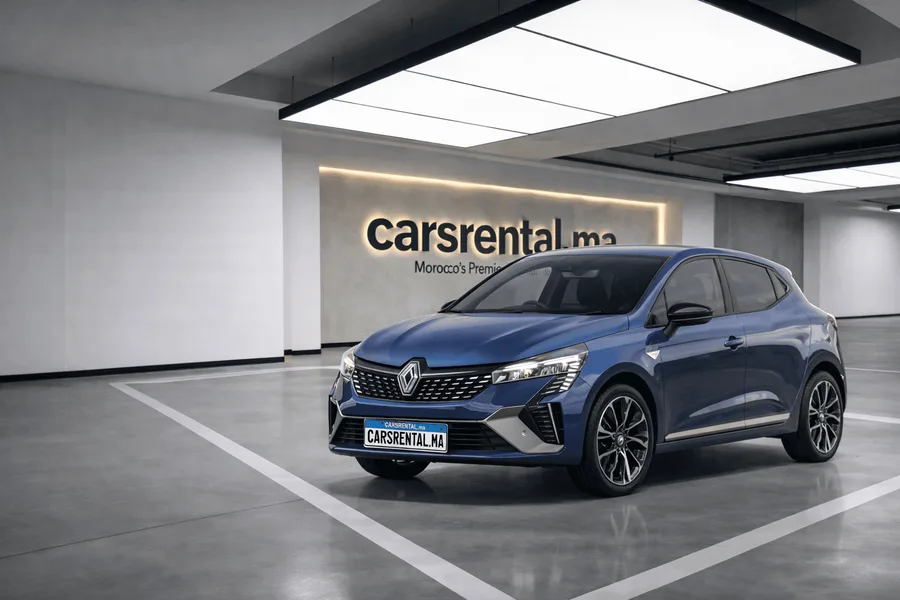
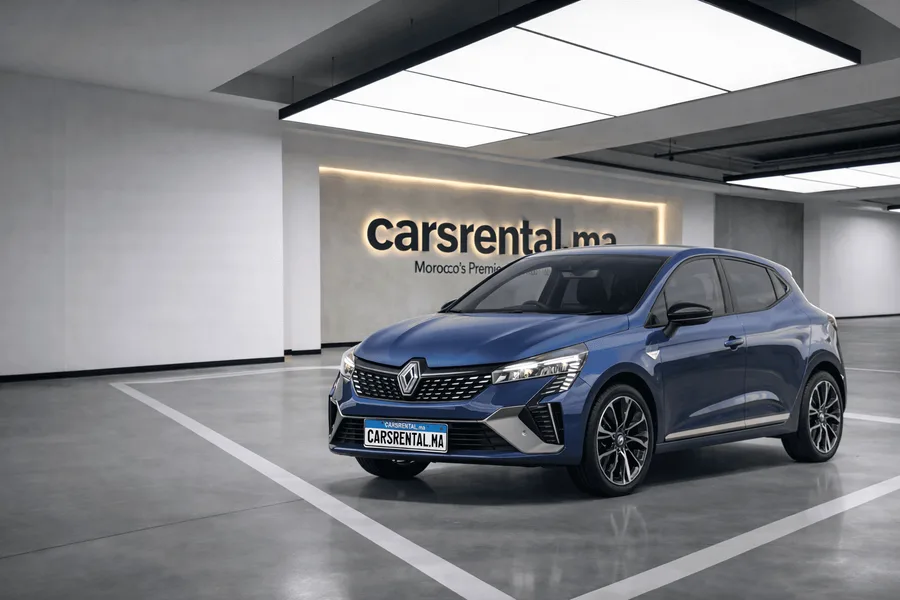
| Renault Clio 5 Manual | Citadine | €30 | +€10 | +€15 | €1,200 | €0 |
| Renault Clio 5 Automatic | Citadine | €35 | +€10 | +€15 | €1,200 | €0 |
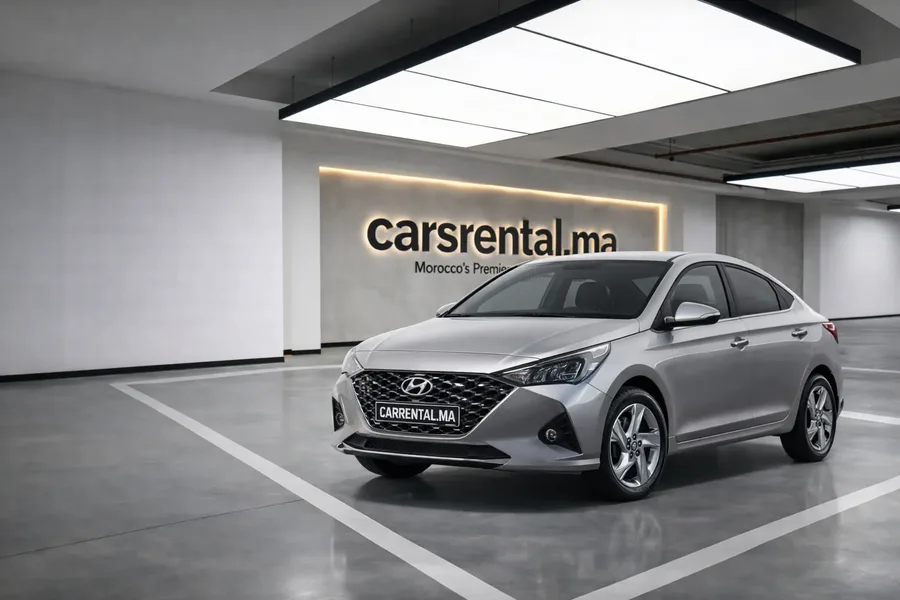
| Hyundai Accent Automatic | Sedan | €50 | — | — | €1,000 | €0 |
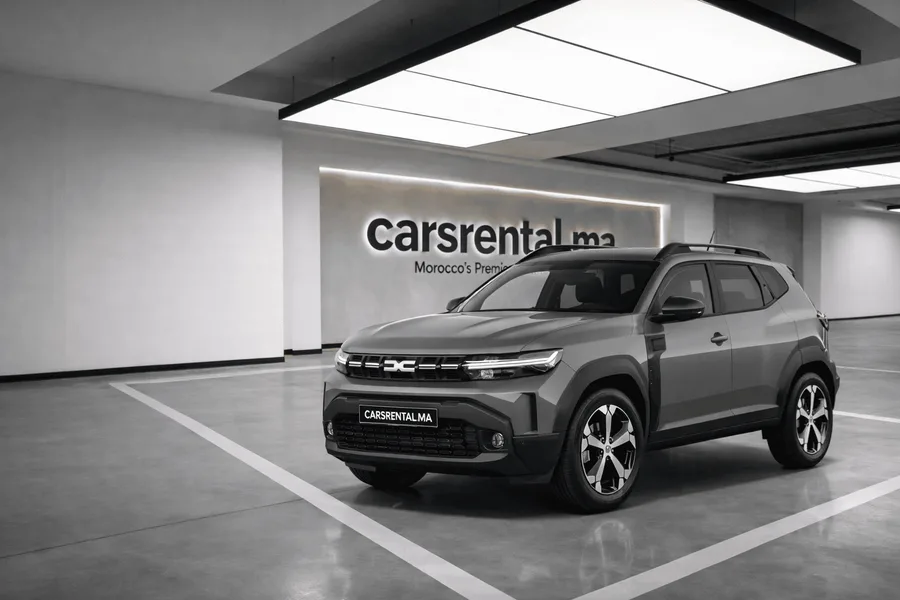
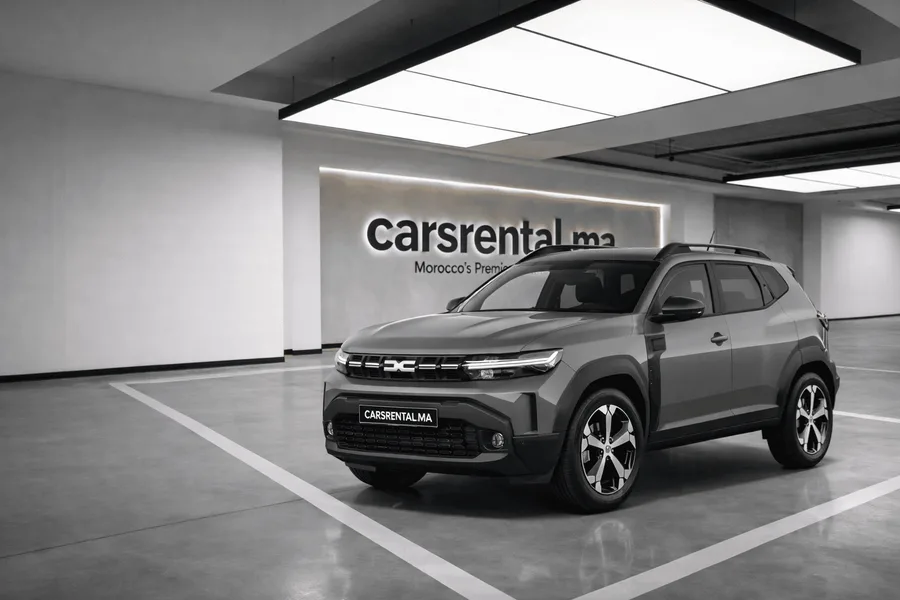
| Dacia Duster Automatic | SUV | €60 | +€12 | +€20 | €1,300 | €0 |
| Dacia Duster Manual | SUV | €40 | +€15 | +€20 | €1,300 | €0 |
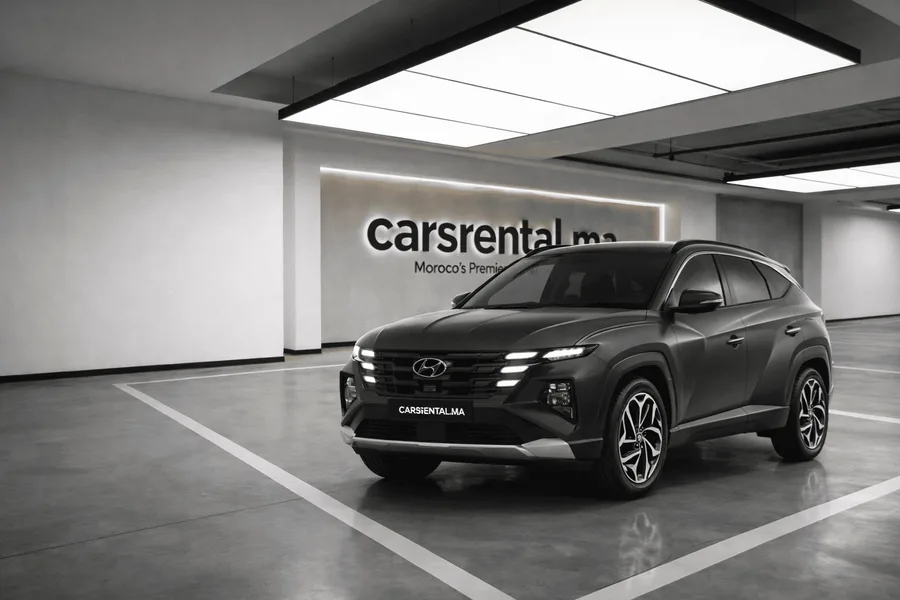
| Hyundai Tucson Automatic | SUV | €80 | +€24 | +€30 | €2,000 | €0 |
Prices reflect June 2026. Daily rates vary by season — check the car's page for the current quote on your travel dates.
Basic insurance: €0/day extra. €2,000 pre-authorization hold on your card for the duration of the rental. Total rental: €560.
Premium insurance: +€30/day × 7 days = €210. Zero deposit hold. Total rental: €770. €2,000 of your card balance freed up for the trip, plus accident assistance and towing included.
The 14 cars where Premium reduces but doesn't eliminate the deposit
These are our premium and luxury cars. Higher franchise costs from the insurance side mean we still need to hold a partial deposit even on Premium. The numbers are still much friendlier than basic — typically a 50–70% reduction. Same upgrade math, applied to Group B:
| Car | €/day | Smart upgrade | Premium upgrade | Basic deposit | Premium deposit |
|---|---|---|---|---|---|
| Mercedes-Benz Class A Auto | €120 | — | — | €1,000 | €500 |
| Volkswagen T-Roc | €90 | +€25 | +€30 | €2,000 | €500 |
| Audi A3 | €120 | +€25 | +€40 | €2,000 | €800 |
| Volkswagen Golf 8 | €110 | +€22 | +€35 | €2,000 | €800 |
| Cupra Leon | €140 | +€40 | +€100 | €2,000 | €800 |
| Cupra Formentor Automatic | €160 | +€35 | +€50 | €2,500 | €900 |
| Audi Q3 | €100 | +€20 | +€30 | €2,500 | €1,000 |
| Range Rover Evoque | €110 | +€30 | +€40 | €3,000 | €1,000 |
| Mercedes-Benz C220d Auto | €240 | +€70 | +€100 | €3,500 | €1,300 |
| Audi Q8 | €240 | +€50 | +€75 | €4,000 | €1,500 |
| Volkswagen Touareg | €180 | +€35 | +€55 | €4,000 | €1,500 |
| Range Rover Sport | €300 | +€40 | +€50 | €4,000 | €1,700 |
| Porsche Macan | €200 | +€40 | +€50 | €3,500 | €1,700 |
| Range Rover Vogue | €440 | +€50 | +€60 | €5,000 | €2,000 |
Why these still carry a deposit: the franchise on a Range Rover Vogue is €5,000 — the cost of serious damage repair on that car is in a different category from a Dacia Logan. We reduce as much as we can with Premium; the residual amount reflects what the insurance side won't waive.
What full insurance covers — and what it doesn't
Honest disclosure first. Premium is the strongest coverage available, but it isn't unlimited. The following are not covered, even on Premium:
- Wheel and alloy damage. Curb hits, scraped wheels — the most common minor damage in city driving. Insurance excludes these because they're rarely from collisions and almost always from driving behavior.
- Scratches without an accident record. If we find a scratch at return and there's no police report or insurance expert assessment from a documented incident, it falls on the driver. Charges typically run €30–€50 for small curb scratches, up to €100 or more for a full-side scratch, depending on severity.
- Lost keys. Replacement key plus reprogramming.
- Burnt seats or ceiling. Smoking damage. Cleaning fees if recoverable; replacement if not.
- Off-road and dirt-track driving. Insurance only covers asphalt and tarmac. If you want to drive on piste — Merzouga, Agafay, dirt routes to remote riads — this is a case-by-case agreement with us, not automatic with Premium.
- Towing under basic insurance. If the car needs to be towed to a workshop and you only have basic, the customer pays the tow fee. Premium covers it.
What Premium does cover, beyond the deposit reduction: collision damage (with police or expert report), windshield damage, theft, vandalism, and roadside assistance on Morocco's main road network.
What happens after a damage or accident
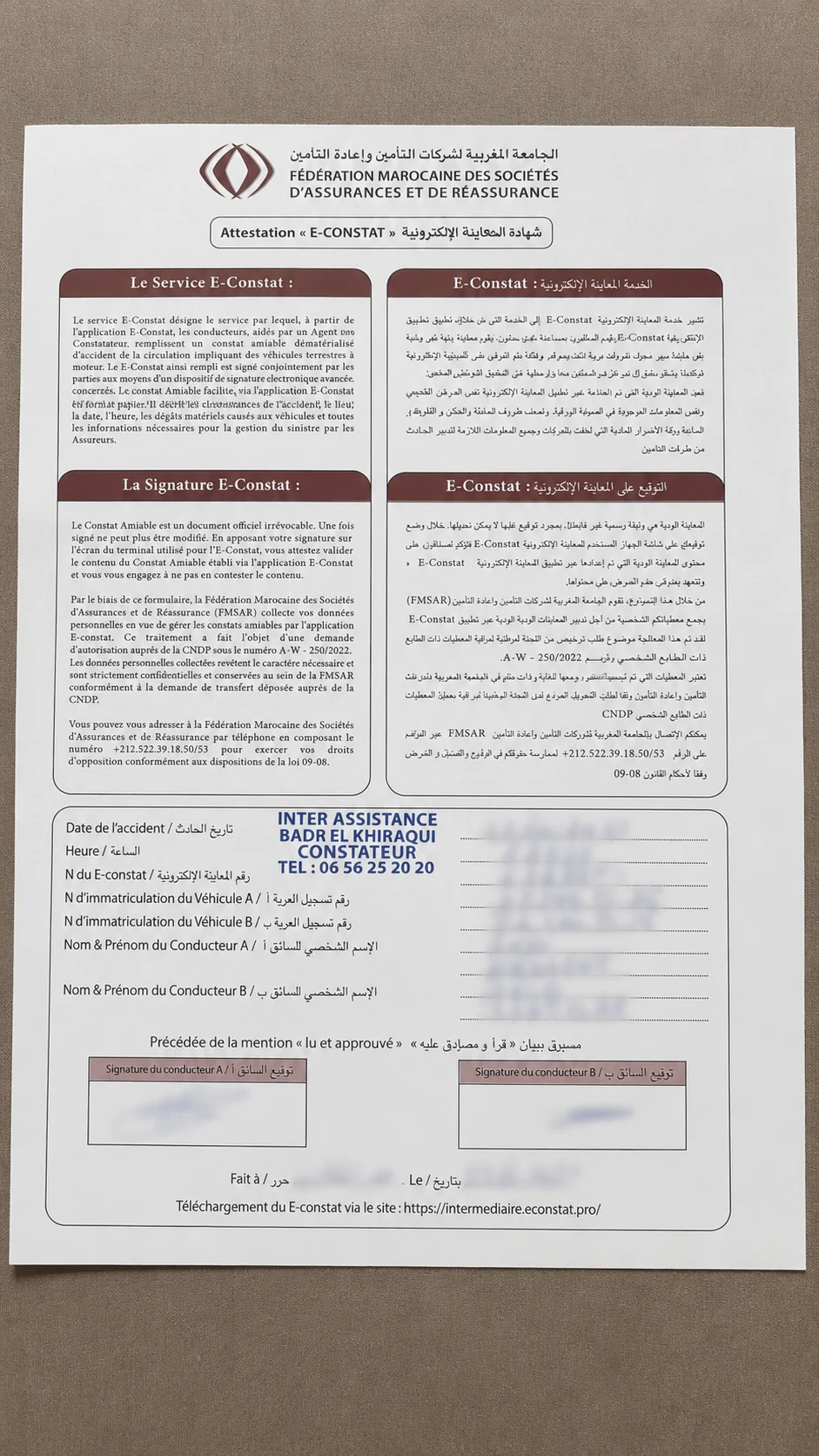
One of the most common questions we get: "if I have no deposit, what stops someone from damaging the car and walking away?" Fair question. Here's the actual process from your first phone call to claim closed.
The five steps when something happens
- You call us. Whatever the situation — minor scratch, accident with another car, hit a wall in a parking lot — first thing, you reach us on WhatsApp. We walk you through what to do.
- We dispatch the insurance expert. If there's no injury, we contact our insurance company and they send a representative to where you are to write the E-Constat (the document above). If someone is injured or an ambulance is needed, the police take charge of the scene and handle the procedure. Either way, an official document gets created.
- Your role ends at the report. You explain what happened, sign the form, and you're done. From there it's between us and the insurance company. You don't pay an upfront amount, don't deal with the workshop, don't carry paperwork to the rental return.
- You send us a clear photo of the report. WhatsApp or email — whichever is easier. We file the claim with the insurance company the same day.
- The car gets to the workshop. If it's still drivable, we coordinate the handoff. If it needs to be towed, towing is included on Premium — on Basic, the customer pays the tow fee. That's the only direct cost on Basic in a not-at-fault scenario.
At-fault vs. not-at-fault — the mechanic most travelers don't know about
Even on basic insurance, you pay €0. The other driver's insurance covers everything. You file the report, you go home, the claim runs on its own.
You owe the franchise. On a Dacia Logan that's €1,000. On a Range Rover Vogue that's €5,000. The basic-tier deposit is held upfront for exactly this reason — to make sure the franchise is already secured if it's needed.
On a Dacia Logan: you pay €0. On a Range Rover Vogue: you pay €2,000 (the residual Premium-tier deposit). Premium absorbs the franchise on most cars; the remainder, when there is one, applies only on luxury vehicles.
What stops abuse
The zero-deposit option isn't unconditional. Before any rental, we check three things: passport validity, driver's license validity, and the customs entry number issued at the Moroccan border. The customs number is the one most operators skip — it's also the one that traces a driver directly if they leave the country without returning the car. Combined with the police-report requirement for any accident with another party, the fraud vector that traditional deposits guard against is already closed.
Versus the international chains
For reference, here's what you'd typically face at the airport rental desks in Casablanca or Marrakech. These figures come from each chain's public Morocco terms (verify at the desk — they shift seasonally):
| Operator | Typical deposit (economy car) | Card type accepted | Zero-deposit option |
|---|---|---|---|
| Hertz Morocco | €1,000–€1,500 | Credit only | No |
| Sixt Morocco | €1,500–€2,500 | Credit only | No |
| Europcar Morocco | €1,200–€2,000 | Credit only | No |
| Budget Morocco | €1,000–€2,000 | Credit only | No |
| CarsRental.ma | €0 with Premium on 13 cars | Credit or debit | Yes |
The biggest practical difference isn't the deposit number — it's debit-card acceptance. International chains in Morocco refuse debit cards entirely. If you're traveling without a credit card (common for students, freelancers, and many European travelers under 30), you're locked out of the international chains regardless of how much you're willing to pay. We accept debit cards.
The cars where €0 deposit applies
If you want a no-deposit rental specifically, pick from this list. Click any car for full specs, photos, and direct booking.
FAQ


Car rental by city
Delivered where your trip starts.
From €30 a day, insurance included. €0 deposit option on selected cars. Free cancellation up to 48 hours.